
Cataract
In the UK, most people with a cataract will have an operation to treat it when the cataract is still at an early stage - mild to moderate blurring of vision. In Angola, typically people come for help when their cataract is much more advanced, i.e. down to 5% vision or less, and very often less than 1% ('hand movements' vision) which means blind in both eyes, often for years, meaning inability to work for a living, and calling on others to help with daily activities. Most cataracts occur in people over 60, but in a society with little in the way of social security, these people would normally still expect to live and work for at least another two decades. In addition, a significant proportion of cataract sufferers are younger than this - people in their twenties and thirties!
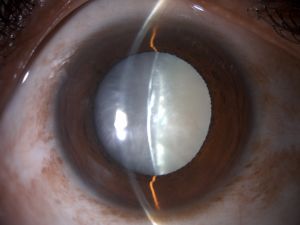
Some eye conditions are difficult to prevent or treat in Africa (e.g. infections, glaucoma, injury) until the general level of wealth and development improve, but cataract can be treated with a relatively low-tech operation called SICS (sutureless incision cataract surgery) with lens implant, which takes 15 minutes to do and restores sight to near normal within a day of surgery for the vast majority of operated people. It is called the 'low-hanging fruit' amongst the known measures to combat sight loss. The challenge is to train enough young Angolan eye doctors to provide this service to those affected wherever they live in the country.
Diabetic Retinopathy
...is said to be the commonest cause of preventable sight loss in the working age population. Although the percentage of people with diabetes in Angola is probably less than in other parts of the world, it is on the rise, and very often not well managed because of a lack of access to good general health care, and because people with diabetes often haven't been shown how to live well with the condition and how to minimise the risk of long term complications. Screening for diabetic retinopathy in its asymptomatic stage (when preventative measures have the best chance of success) in Angola is still in its infancy and so we are working with regional centres to develop screening strategies and treatment protocols that are best suited to the conditions which they and their population are living in.
Boa Vista Annual Reports
The Boa Vista Health Clinic has been going strong since 1994, and their annual reports continue to show great results. Click below to see the full report.